
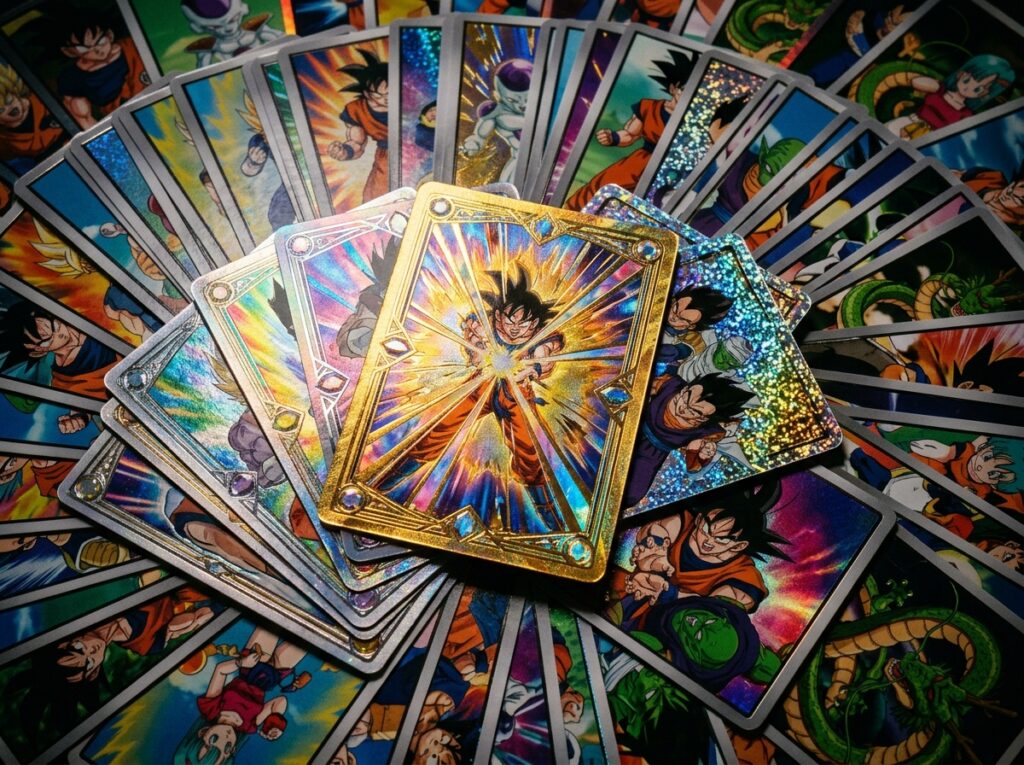
Dragon Ball card rarity can feel confusing when the same character appears across different sets, finishes, and games. I first check whether a card belongs to Dragon Ball Super Card Game Masters or Fusion World because their rarity systems are separate and cannot be compared directly. From Common and Uncommon cards to premium rarities such as Super Rare and Special Rare, each label offers clues about a card’s printing and collector appeal.
I also check the rarity mark, card number, set symbol, artwork, and finish before judging a card’s value. This helps me separate a genuinely scarce card from one that simply has an eye-catching foil treatment or alternate artwork. With the right steps, identifying Dragon Ball card rarity becomes much easier, even when a card comes from an older set or unfamiliar release.
Key Takeaways
- Always identify whether a card belongs to Dragon Ball Super Card Game Masters or Fusion World first, because their rarity systems, set numbering, and print patterns are separate and cannot be compared directly.
- Verify rarity using the game logo, set code, card number, printed rarity mark, artwork, finish, and official set checklist; foil or alternate artwork alone does not prove scarcity.
- Treat rarity as a starting point rather than a guaranteed value indicator. Print availability, pull rates, character popularity, competitive demand, promotional status, and collector interest all influence price.
- Evaluate condition separately by checking centering, edge wear, scratches, dents, and print flaws, since physical condition can significantly affect the market value of even highly rare cards.
Introduction To Dragon Ball Card Rarity
When I identify Dragon Ball card rarity, I first determine which game the card belongs to. The two main games are Dragon Ball Super Card Game Masters, the long-running and more complex game, and Dragon Ball Super Card Game Fusion World, the streamlined game launched in 2024. Each game has its own card pool, set numbering, rarity labels, and print patterns, so the same abbreviation may not have the same meaning in both games. I check the set code, card layout, and game branding before judging a card’s scarcity or value.
In Masters, the modern rarity ladder generally includes Common (C), Uncommon (UC), Rare (R), Super Rare (SR), Special Rare (SPR), and premium categories such as Special Leader Rare (SLR) and Concept Rare (CR). Fusion World has a separate structure with its own categories and premium versions, even when labels such as C, R, or SR appear familiar. I use the rarity symbol as a starting point, then consider the card’s set, print treatment, alternate artwork, tournament demand, and distribution. This gives new collectors a practical way to identify card types and helps experienced collectors avoid comparing rarity systems that were not designed to match.
Identifying Masters Card Rarities

I start by confirming that the card belongs to Dragon Ball Super Card Game Masters because its rarity symbols are not interchangeable with those of other Dragon Ball card games. The standard Masters ladder runs from C (Common) and UC (Uncommon) to R (Rare), SR (Super Rare), SPR (Special Rare), SLR (Special Leader Rare), CR (Concept Rare), SCR (Secret Rare), and GDR (God Rare). In general, each step represents a scarcer or more premium card, although print runs and pull rates can vary by set. For example, an SR is usually a premium playable card, while an SPR often gives that card alternate artwork or an upgraded finish.
I also check the card number, set code, rarity mark, and official set checklist instead of judging rarity by shine alone. CR, SCR, and GDR cards are typically among the most difficult modern Masters cards to pull, but scarcity does not automatically determine market value. Character popularity, competitive demand, condition, centering, and the number of available copies can all affect what collectors are willing to pay. Older releases may use historical rarity labels or treatments that do not fit neatly into the current ladder, so the product’s release year and set information are important clues.
Signed cards and parallel cards require extra attention because they may be special versions of an existing rarity rather than entirely new levels on the ladder. A parallel treatment can change the artwork, foil pattern, border, texture, stamp, or finish while keeping the same base rarity. Some products also use promotional or event-specific labels. Signed versions can be especially scarce, but I verify whether the signature is printed, stamped, or hand-signed before comparing prices. When I am unsure, I compare the card with the set checklist and product details, then record both the printed rarity and special treatment in my collection notes.
Understanding Fusion World Rarities
Fusion World uses a more streamlined rarity system than Dragon Ball Super Card Game Masters, so I first confirm which game the card belongs to. Its main labels include C for Common, UC for Uncommon, R for Rare, SR for Super Rare, SPR for Special Rare, and SCR for Secret Rare, although available rarities can vary by set. The label usually appears in the card’s lower information area near the card number, while the set code identifies the product and release, such as FB01 for the first booster set. I treat these details as a starting point because rarity alone does not always determine a card’s scarcity or market value.
Card treatments also help me separate a standard version from a premium or alternate-art version. Alternate-art cards typically use different artwork and may have a distinct card-number indicator or special notation in the official set checklist. Foil patterns and textured finishes can also signal a higher-tier treatment. I compare the card number, rarity symbol, artwork, and set checklist instead of relying only on how shiny the card looks. This makes Fusion World easier to identify and prevents its labels from being confused with the broader rarity structure used in Masters.
Checking Scarcity And Card Value

Before judging scarcity, I identify whether a card belongs to Dragon Ball Super Card Game Masters or Dragon Ball Super Card Game Fusion World because their rarity systems are not interchangeable. In Masters, symbols such as C, UC, R, SR, SPR, and SLR indicate different rarity levels, while Fusion World uses its own card classifications and product structure. A high-rarity card is not automatically scarce if it appears frequently in packs or had a large print run. Pull rates, which show how often a card appears in sealed products, offer a better comparison when I evaluate cards from the same set.
I also consider demand, artwork, set age, and promotional status before estimating value. A popular character, playable card, striking alternate art, older release, or event promo may attract more buyers than a newer card with a higher rarity symbol. Promotional cards can be difficult to compare because some were distributed widely while others were limited to specific events or products. Scarcity matters most when collectors also want the card, so a rare card with little demand may sell for less than a more common card featuring a highly sought-after character.
Condition can affect the final price as much as rarity, especially for older or premium cards. I check for whitening on the edges, surface scratches, dents, print lines, and poor centering, then consider whether professional grading is worthwhile. A strong grade can make a clean, scarce card easier to compare and sell, but grading fees and results do not guarantee a higher value. I treat rarity symbols as a starting point, then compare print availability, recent sales, condition, and buyer interest instead of assuming every SR, SPR, or other premium card is equally valuable.
Identifying Cards With Rarity Symbols
When I check Dragon Ball card rarity, I first identify which game the card belongs to. Dragon Ball Super Card Game Masters and Dragon Ball Super Card Game Fusion World use different rarity systems, so I never compare their symbols as if they mean the same thing. I look at the game logo, card layout, and set number, which usually appears near the bottom or along the card edge. The set code helps confirm the product line and separate cards with similar artwork or character names. This quick check prevents mistakes before I evaluate the card’s value or scarcity.
Next, I read the rarity abbreviation printed on the card and compare it with the correct set information. In Masters, examples include C for Common, UC for Uncommon, R for Rare, SR for Super Rare, and SPR for Special Rare. Other premium designations may also appear in some releases. I then inspect the foil pattern, border, and surface finish because a premium version may use special shine, texture, or color treatment. Artwork can provide another clue, especially when an alternate-art card shares the same character and card number as a standard version. I treat these visual details as supporting evidence rather than relying on foil alone.
Before buying, selling, or trading, I verify every detail against an official card list or product checklist. I compare the card number, name, rarity abbreviation, artwork, and alternate-version markings to confirm that they match the listed release. If the card has a different border or foil pattern from the checklist, I pause and investigate instead of assuming it is rarer. I also check the card’s condition separately because wear, scratches, and edge damage can affect its market value even when the rarity is confirmed. This process gives me a clearer basis for identifying the card and discussing its scarcity accurately.
How to Read Dragon Ball Card Rarity
Understanding Dragon Ball card rarity starts with identifying the game. Dragon Ball Super Card Game Masters uses a broader rarity system, including C, UC, R, SR, SPR, SLR, and CR, while Fusion World uses its own symbols and card structure. These systems are not interchangeable, so the same-looking symbol or foil treatment may have a different meaning in each game. I always check the card’s game logo, set code, and printed rarity symbol before judging its scarcity or value.
The rarity symbol is a useful guide, but it does not tell the whole story. Set size, print availability, alternate artwork, promotional status, condition, and collector demand can all affect how difficult a card is to find. Older or unusual cards may use symbols and formats that differ from current releases, so I check official card lists, set information, and product announcements when something seems unclear. Taking a moment to verify the details helps new collectors and longtime fans identify cards accurately and avoid confusing rarity with age or appearance.
Frequently Asked Questions
1. What does Dragon Ball card rarity mean?
Dragon Ball card rarity shows how a card was printed and how commonly it appears in a set. Common and Uncommon cards are usually easier to find, while Super Rare, Special Rare, and other premium rarities are generally harder to pull or distribute.
2. How can I tell whether my card is from Masters or Fusion World?
I check the game branding, card layout, set code, card number, and overall design. Dragon Ball Super Card Game Masters and Fusion World use separate card pools and rarity systems, so I never compare their rarity labels without confirming the game first.
3. What are the main rarity levels in Dragon Ball Super Card Game Masters?
Masters commonly uses Common (C), Uncommon (UC), Rare (R), Super Rare (SR), and Special Rare (SPR). Some sets also include premium categories such as Special Leader Rare (SLR) and Concept Rare (CR), which can have stronger collector appeal.
4. Does a higher rarity always mean a Dragon Ball card is worth more?
No, rarity is only one part of a card’s value. I also consider the character, set, artwork, condition, print treatment, tournament demand, and number of available copies before judging the price.
5. How do I identify the rarity of a Dragon Ball card?
I start by finding the rarity mark, then compare the card number and set symbol with a trusted card list or official set checklist. I also inspect the artwork and finish because alternate art, textured foil, or special printing can indicate a premium version.
6. Does foil or alternate artwork automatically make a card rare?
Not always. Foil and alternate artwork can make a card more desirable, but I confirm the official rarity, set number, and print version before calling it scarce or valuable.
7. Can I compare the rarity of Masters and Fusion World cards?
I do not compare their rarity labels directly because the games have different card pools, set numbering, and print patterns. A Common, Rare, or Super Rare label may have a different pull rate and market demand in each game.
8. What should I check before buying or selling a Dragon Ball card?
I verify the game, set, card number, rarity mark, artwork, finish, and physical condition. I then compare recent sales for the exact version because similar-looking cards can have very different prices based on scarcity and collector demand.

