
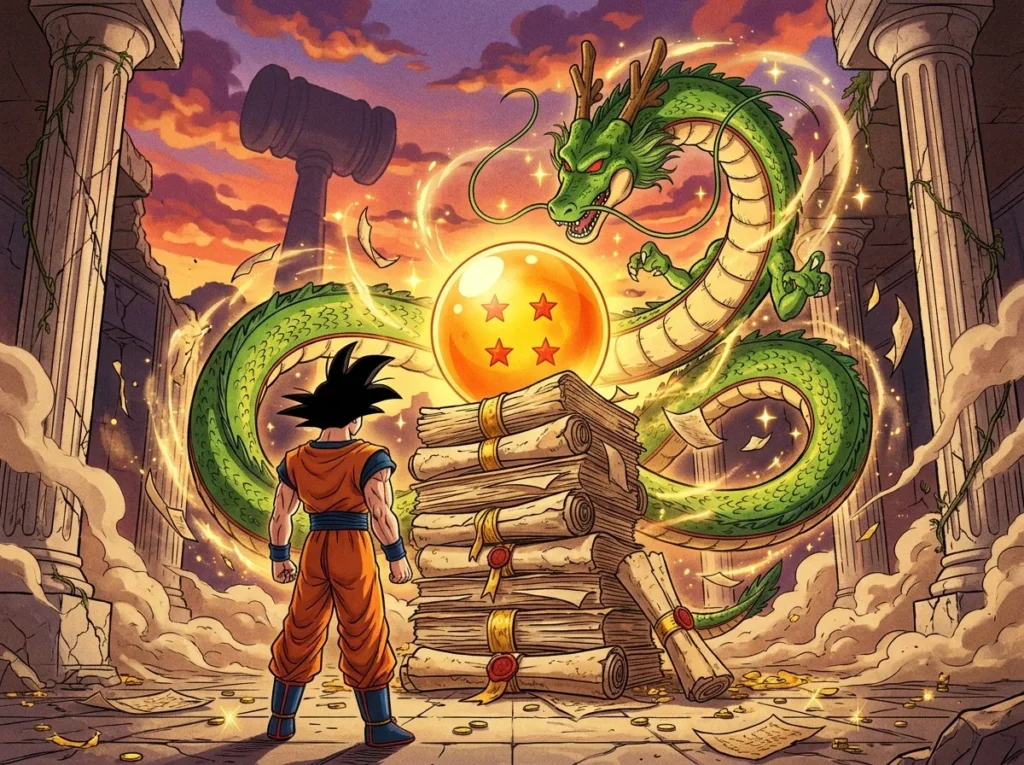
Dragon Ball ownership is split among several companies, so no single business controls every right to the franchise. Shueisha handles copyright questions for the manga and books, while Toei Animation handles them for the anime and movies. The franchise has run in Weekly Shonen Jump since 1984, and its rights have grown into a network of publishing, animation, and licensing partners.
Toei’s copyright page credits Dragon Ball, Dragon Ball Z, Dragon Ball GT, Dragon Ball Z Kai, and Dragon Ball Super to “Bird Studio/Shueisha, Toei Animation,” which shows shared credit rather than one owner. Licensing adds another layer. A 2023 to 2024 licensing report counted 45 agreements between Toei Animation and Crunchyroll for the core series, including 18 new licenses and 27 renewals.
Key Takeaways
- No single company owns all of Dragon Ball, because Shueisha, Toei Animation, Bird Studio, and Bandai Namco each handle a different part of the franchise.
- For questions about the Dragon Ball manga and books, contact Shueisha, while questions about the anime and movies should go to Toei Animation.
- For merchandise sold in North America, Latin America, South Africa, Australia, and New Zealand, Toei Animation’s Los Angeles office handles the consumer-product licensing.
- Each Dragon Ball license is limited to a specific type of use, length of time, and location, so anything beyond those terms requires a new agreement or renewal.
- Akira Toriyama’s death on March 1, 2024 did not change who controls Dragon Ball, and existing licenses continue under their original terms.
Does One Company Own All of Dragon Ball?
No single company owns every Dragon Ball right. Publishing, animation, and licensing are handled by different companies, and each one works within its own role. The split grew out of how the franchise was built. It started as a manga in Weekly Shonen Jump in 1984, then expanded into anime, movies, games, toys, and location-based entertainment. Each new medium brought in different teams and partners.
Japan’s copyright law makes this kind of split workable. Under the Japanese Copyright Act, a copyright can be transferred in whole or in part, and an owner can authorize someone else to use a work within set limits. That means one company can hold one piece of a right while another company holds a different piece, with each agreement defining its own scope and conditions.
Regional deals add another layer. Toei Animation’s Los Angeles office handles program and consumer-product licensing for North America, Latin America, South Africa, Australia, and New Zealand. A toy deal or streaming agreement in one of those regions may run through a different desk than the one handling Japan. Bandai Namco’s reporting describes rights holders granting merchandising permission and coordinating on products such as games, cards, and figures.
The size of the franchise makes central control hard. Toei describes six anime series and 21 feature films, and the manga has sold 260 million copies worldwide. Even big projects need approval first. A proposed Dragon Ball theme park near Paris, for example, had not yet secured authorization from the Japanese rights holders when Le Monde reported on it in August 2026.
Which Company Handles the Manga and Books?
Shueisha is the company to contact for copyright questions about the Dragon Ball manga and books. The official Dragon Ball site sends those inquiries straight to Shueisha, the publisher behind Weekly Shonen Jump, where the manga first ran starting in 1984.
Bird Studio is the other name you’ll see on the printed side of the franchise. Toei’s copyright page credits Dragon Ball, Dragon Ball Z, Dragon Ball GT, Dragon Ball Z Kai, and Dragon Ball Super to Bird Studio and Shueisha, along with Toei Animation. Bird Studio is the creative studio linked to manga creator Akira Toriyama, so the credit reflects the team that made the stories rather than one company owning the work outright.
The publishing side is big. A September 2024 Toei Animation press release said the manga had sold 260 million copies worldwide. Numbers that large mean the manga is published in many countries and languages, and each foreign edition usually runs through its own publishing agreement with a local company.
If you want to know who handles a specific volume, start with the copyright line printed in the book. Manga editions usually carry a credit that names Bird Studio and Shueisha, which tells you where to begin your search. From there, the official Dragon Ball site can point you to the right contact for questions about manga or art books.
Who Controls the Anime and Movies?
Toei Animation is the company to contact for copyright questions about the Dragon Ball anime and movies. The official Dragon Ball site sends anime and movie inquiries to Toei, while questions about the manga and books go to Shueisha. That split makes it easy to know where to start, even though the two sides often appear together in the credits.
Toei’s copyright page lists five titles: Dragon Ball, Dragon Ball Z, Dragon Ball GT, Dragon Ball Z Kai, and Dragon Ball Super. Z Kai is a newer version of Dragon Ball Z with re-edited episodes, so it appears as its own entry. Listing each title separately shows that the rights are tracked by series, not by the franchise as one block.
The anime side is also large. Toei describes the franchise as six episodic series and 21 feature films. Each film and series can carry its own agreements, so a question about a movie may lead to different paperwork than a question about a TV series.
If you’re trying to sort out a specific title, begin with the credits at the start or end of the episode or film. Look for the line that names Bird Studio, Shueisha, or Toei Animation, then compare it with the copyright page. That gives you the names to search for before you contact anyone.
Who Licenses Dragon Ball Merchandise and Games?
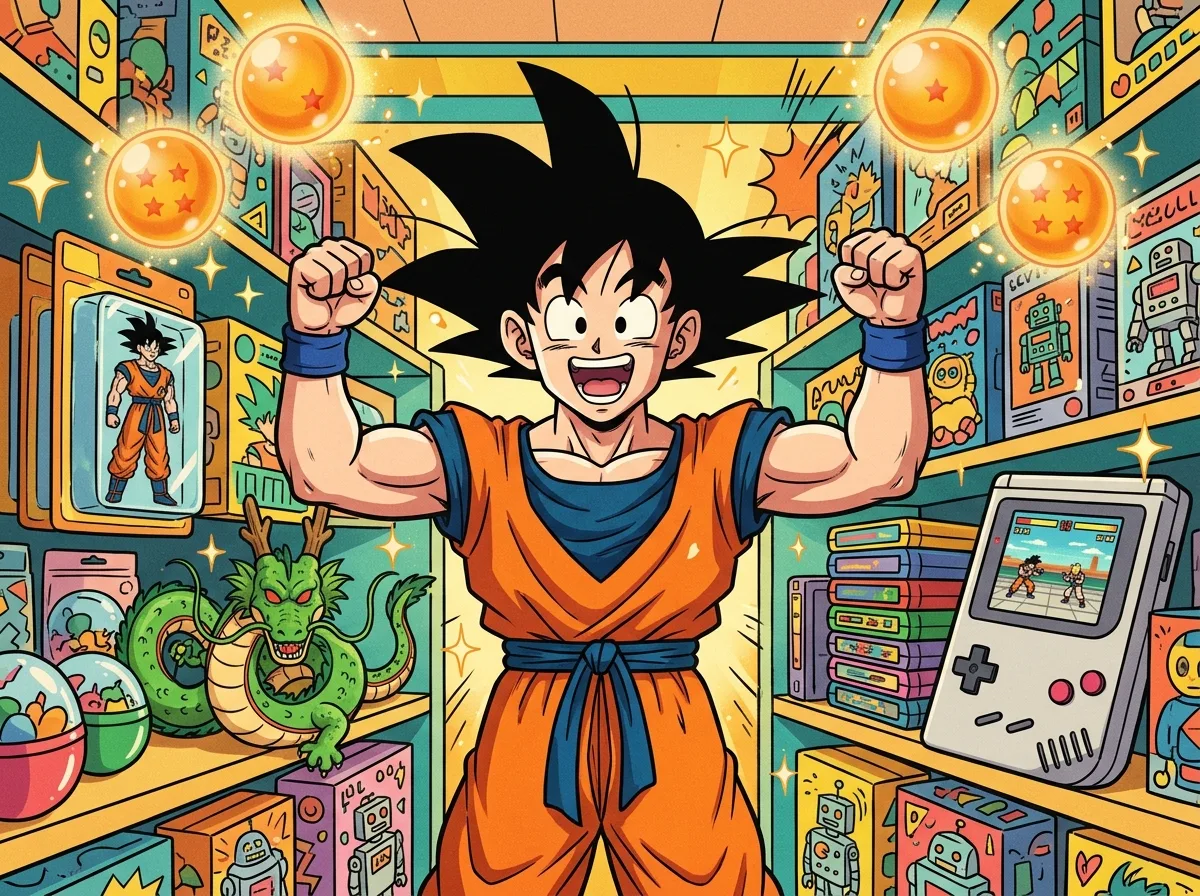
Toei Animation handles consumer-product licensing in certain regions, while Bandai Namco appears in merchandising permission, games, cards, and figures. Each company covers its own part of the market, so a single Dragon Ball product can involve more than one name.
For fans in North America, Latin America, South Africa, Australia, and New Zealand, the key contact is Toei Animation’s Los Angeles office. That office handles program licensing and consumer-product licensing for those five regions. If you collect official merchandise sold in one of them, that team is the natural starting point for questions about who approved a product.
Bandai Namco has a visible role on the product side. Bandai Namco’s 2019 integrated report describes rights holders granting merchandising permission and coordinating with the Bandai Namco Group on a new film. The same report lists Bandai Namco products in network content, home video games, cards, and figures.
For game fans, the publisher name on the box or the store page is the first clue. A title published by a Bandai Namco company points to that group’s licensing and development work. It does not, on its own, tell you who approved every character, logo, or artwork inside the game.
Public credits have limits, though. Japan’s copyright rules allow an owner to transfer a right in part and to license it within set conditions, and those terms are written into private contracts. A copyright line, a regional office, or a company logo shows the public side of the arrangement, but it does not reveal every agreement behind a product, a game, or a card set.
How Are Dragon Ball Licenses Handed Out?
Licenses move between companies through permissions that are limited in scope. Under Article 61 of Japan’s copyright law, a copyright can be transferred in whole or in part, so an owner can hand over an entire right or just one piece of it. Under Article 63, a copyright owner can also authorize another person to use a work, but only within the scope and conditions of that authorization. A license is therefore a permission with clear edges, not a sale of the whole franchise.
Those edges usually cover things like the type of use, the length of time, and the places where it applies. A streaming partner, for example, might be allowed to show a series in certain countries for a set period. Using the series anywhere else, or after the period ends, would need a new agreement.
A 2023 to 2024 licensing report from aNb Media tracked how often these deals were made. Over those 12 months, Toei Animation and Crunchyroll signed 45 agreements covering Dragon Ball, Dragon Ball Z, and Dragon Ball Super. Of those, 18 were new licenses and 27 were renewals.
The difference matters. A new license starts a fresh agreement with its own terms. A renewal extends an existing relationship, which means the two companies were already working together. The fact that renewals made up more than half of the deals suggests that much of the licensing work is about keeping established partnerships running.
If a series disappears from one streaming service and shows up on another, the cause is usually an expired or moved license rather than a change in who owns the story.
Does Akira Toriyama’s Death Change Who Owns Dragon Ball?
No, Akira Toriyama’s death did not change who controls Dragon Ball. The rights remain divided among the same companies, with Shueisha, Toei Animation, Bird Studio, and Bandai Namco each covering its own part of the franchise. A notice dated March 8, 2024 said Toriyama died on March 1, 2024.
The notice was signed by Bird Studio and Capsule Corporation Tokyo, the same names that appear on the franchise’s public credits. Signing the notice showed who spoke for the work at that time, but it did not move any rights to a new owner.
Existing licenses and agreements also kept their own scope and conditions. A streaming deal, a toy license, or a game agreement still runs under the terms written into it, so the death of a creator does not cancel those arrangements.
New projects still need approval. Le Monde reported on August 26, 2026, that a proposed Dragon Ball theme park near Paris had not yet secured authorization to use the characters and brand. The project shows that the Japanese rights holders still review and approve major uses of the franchise.
Checking Rights Credits for Your Own Projects
Start with the official Dragon Ball site, which directs manga and book questions to one contact and anime and movie questions to another. Choose the right one before you write anything, so your message reaches the team that can answer it.
Next, look at the copyright line on the official material you’re checking. A printed credit in a volume or a credit at the end of an episode or film names the companies behind that release, and those names give you the exact terms to search for.
Licensing roles can also differ by region and product type. A toy sold in one country may follow a different approval path than a game sold in another, so note the product, the country of sale, and the credit line you found. That record will make it much easier to reach the right contact.
Recording Project Details for Licensing Checks
Start by building a short record for each project. Write down the product name, the country where it will be sold or shown, and the exact credit line printed on the official material. A fan booth in Toronto, for example, falls under the North American licensing work at Toei Animation’s Los Angeles office, while a poster sold in Japan would follow a different path.
Next, send your question to the right desk. Manga and book questions go to Shueisha, and anime and movie questions go to Toei Animation. Include the title, the volume or episode number, and the credit line, so the team can check the correct agreement without guessing. For merchandise in the five regions Toei covers, the Los Angeles office is the natural first stop.
Keep your questions specific. Ask whether a particular use is approved for the place and time you have in mind, since licenses are limited by type of use, length of time, and location. Save any written reply, because a verbal answer is hard to rely on if a question comes up later.
If your plan involves selling something or showing it to the public, speak with a lawyer who works in intellectual property before you spend money. Public credits show who is involved, but they do not reveal the private terms behind each deal.
Frequently Asked Questions
1. Is Dragon Ball owned by Disney or Warner Bros?
Disney and Warner Bros do not appear in the franchise’s copyright credits, which name Bird Studio, Shueisha, and Toei Animation, with Bandai Namco handling merchandising permission, games, cards, and figures.
2. Is Dragon Ball owned by Bandai Namco?
Bandai Namco is a major partner in Dragon Ball but does not own the whole franchise. Its companies handle merchandising permission, video games, cards, and figures, and they coordinate with the other rights holders. Its role covers those product areas rather than the manga or the anime itself.
3. Does Crunchyroll own Dragon Ball or only stream it?
Crunchyroll does not own Dragon Ball. It streams the series under licenses from Toei Animation, which set the countries, time periods, and conditions for each deal. In the 12 months covered by one recent licensing report, Toei and Crunchyroll signed 45 agreements, including 18 new licenses and 27 renewals.
4. Is Dragon Ball still popular?
Yes, Dragon Ball remains widely popular. The manga has sold 260 million copies worldwide, and the anime spans six episodic series and 21 feature films. The steady flow of licensing deals and renewals shows that partners continue to work with the franchise.
5. Can I sell fan art featuring Dragon Ball characters?
Selling fan art with Dragon Ball characters is something to clear with the rights holders first, since the characters, logos, and artwork are tied to licensed agreements. Licenses are limited by the type of use, the length of time, and the location, so a sale in one country may not be covered in another. If you plan to sell anything, speak with a lawyer who works in intellectual property first.
6. How long do Dragon Ball licenses usually last?
The length of a Dragon Ball license is written into each individual agreement rather than set by one standard rule. A streaming partner, for example, may be allowed to show a series in certain countries for a fixed period. Once that period ends, the partner would need a new agreement or a renewal to keep showing it.

