The Dragon Ball Z Kai differences go far beyond a shorter episode count. When I compare it with the original Dragon Ball Z, I see a streamlined version that removes much of the filler, updates the picture and sound, and brings the story closer to the manga. It is not a sequel or a completely redrawn remake. It is a carefully recut and remastered adaptation.
For me, the biggest contrast is the viewing experience. Dragon Ball Z offers a longer, more expansive journey, while Dragon Ball Z Kai moves through the main story with greater focus and newly recorded dialogue. Understanding these changes makes it easier to decide which version fits your preferences, whether you want the original’s extra moments or a faster, more manga-focused adventure.
Key Takeaways
- Dragon Ball Z Kai is a recut and remastered version of Dragon Ball Z, not a sequel or fully redrawn remake. It preserves the core story and major battles while bringing the presentation closer to the manga.
- Kai is significantly shorter—167 internationally released episodes compared with Dragon Ball Z’s 291—because it removes much of the filler, repeated footage, extended battles, and long reaction shots.
- Kai features cleaner remastered visuals, newly recorded dialogue, and revised English and Japanese performances, though soundtrack choices vary by release. It is generally presented in widescreen and may crop portions of the original 4:3 image.
- Choose Kai for a faster, more focused first viewing, or choose the original Dragon Ball Z for extra character moments, slower buildup, nostalgic presentation, and more side material.
Story Length And Filler Cuts
I see the biggest Dragon Ball Z Kai difference in its shorter story length. The original Dragon Ball Z runs for 291 episodes, while the internationally released version of Kai has 167 episodes. Kai removes much of the padding between major manga story points, including repeated flashbacks, long reaction shots, and scenes that extend battles beyond their main purpose. As a result, important events usually follow one another more quickly, making the series easier to watch in less time. For viewers who want the core story without as much waiting, Kai offers a more direct version of the same adventure.
Kai does not remove every scene that was not taken directly from the manga. Some filler material remains when it helps connect important events, explain a character’s actions, or preserve a memorable character moment. I also find that these smaller additions can make transitions feel smoother, even when they are not essential to the main plot. The original series is a better choice for viewers who enjoy a slower pace and more extra content, while Kai suits anyone who prefers a focused retelling. Both versions follow the same major story, but their pacing creates a noticeably different viewing experience.
Missing Scenes And Story Changes

The biggest Dragon Ball Z Kai differences appear in the amount of material removed from the original series. Kai trims extended battles, side stories, repeated flashbacks, and long reaction shots that once slowed the story down. Some training scenes and conversations are shorter, while filler material that did not come from the manga is reduced or removed. I find that these edits move major events forward more quickly without changing the central conflict or the outcome of the main story.
Even with the tighter pacing, Kai is not simply the same episodes with a few minutes cut out. Transitions may feel quicker, jokes can land differently, and some small character moments are shortened or missing. The re-edited version also uses newly recorded dialogue in many scenes, which can change the tone of familiar exchanges. Viewers who prefer a focused, manga-based story may enjoy these changes, while longtime fans may miss the slower reactions, extra humor, and side material found in the original.
Visuals Voices And Music
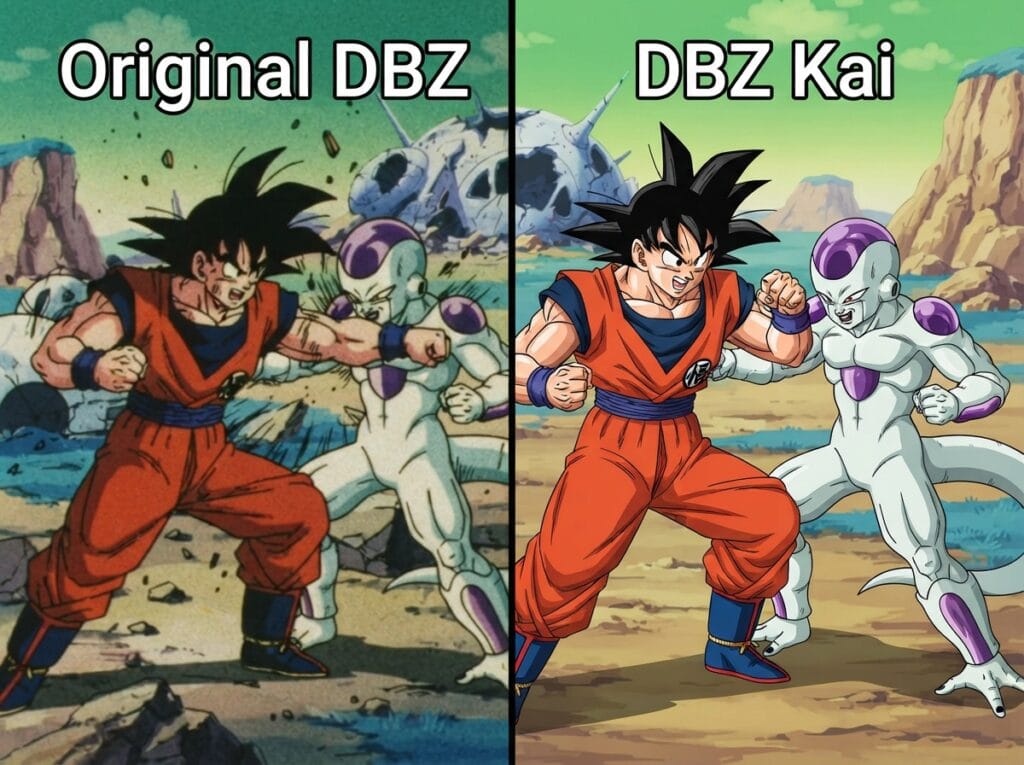
The visual upgrade is one of the clearest Dragon Ball Z Kai differences. Kai uses remastered footage with brighter colors, cleaner images, and sharper details, but it is not a completely redrawn anime. The original Dragon Ball Z commonly appears in a 4:3 broadcast format, while modern releases of Kai generally use a widescreen presentation that can crop parts of the older image. I find Kai’s presentation easier to watch on modern screens, although some viewers prefer the softer, more familiar look of the original broadcast.
Kai also features newly recorded Japanese dialogue and a new English dub, allowing many scenes to follow the manga’s tone and wording more closely. Several English performances sound more natural or restrained than they did in the original version, while other viewers may prefer the older cast direction and delivery. Because the scripts were revised, some jokes, character lines, and explanations are phrased differently. These changes do not alter the main story, but they can make Kai feel like a fresh interpretation of familiar scenes.
Music creates another important difference because Kai has appeared with more than one soundtrack version. Its original Japanese broadcast used a newly composed score, while some later releases replaced that music with tracks associated with the original Dragon Ball Z score. The English releases can also vary in how they use background music, so the same scene may create a different mood depending on the version. I recommend checking which soundtrack a release includes before choosing, especially if the music of the original series is part of your nostalgia.
Which Version Should You Watch

I recommend Dragon Ball Z Kai if you want a faster, more manga-focused story. Kai removes much of the filler and repeated footage that made the original series feel slower, while keeping the main plot and important battles easy to follow. Its remastered picture and newly recorded dialogue also give the series a cleaner, more modern presentation. However, Kai is not a completely new anime because it is a recut version of the original Dragon Ball Z footage.
The original Dragon Ball Z is the better choice if you enjoy a slower pace, extra scenes, and the nostalgic feel of the first broadcast version. Its longer episode count gives supporting characters and dramatic moments more room to breathe, although some added material can interrupt the central story. Voice performances may also influence your decision, since some viewers prefer the original recordings while others enjoy Kai’s revised performances. I would choose the original if atmosphere and familiarity mattered more to me than reaching the main story quickly.
Watching both versions can offer the fullest view of the series and make the Dragon Ball Z Kai differences easier to appreciate. I would start with Kai for a streamlined first viewing, then sample the original for its extended scenes, distinct presentation, and moments that Kai shortens or removes. Viewers who value the complete history of the anime may prefer beginning with the original and using Kai as a focused rewatch. Either way, the best choice depends on whether I want efficiency or a broader, more nostalgic experience.
How Dragon Ball Z Kai Differs
The main Dragon Ball Z Kai differences come down to pacing, presentation, and how closely the series follows the manga. Kai keeps the same core story and major battles as Dragon Ball Z, but it removes much of the filler and repeated footage that made the original run 291 episodes long. With 167 episodes in its international release, Kai moves through the story more quickly and gives less time to side plots that do not affect the main conflict. I also noticed that its remastered visuals look cleaner, while the updated audio and newly recorded dialogue give familiar scenes a more modern feel. However, Kai is still a re-edited version of the original anime, not a completely new or fully redrawn series.
I recommend Dragon Ball Z Kai for viewers who want a shorter, more focused introduction to the story and its manga-based plot. The original Dragon Ball Z remains a better fit for fans who enjoy extra character moments, slower buildup, and the atmosphere of its original broadcast presentation. Some viewers may also prefer the original voice performances, while others will appreciate Kai’s revised recordings and clearer pacing. Neither version is universally better because each serves a different viewing preference. For a streamlined adventure, I would choose Kai, but for the fullest nostalgic experience, the original series still has plenty to offer.
Frequently Asked Questions
1. What are the biggest Dragon Ball Z Kai differences?
The biggest differences are Kai’s shorter length, reduced filler, updated picture and sound, and newly recorded dialogue. I see Kai as a more focused version of Dragon Ball Z that follows the main manga story with less extra material.
2. How many episodes does Dragon Ball Z Kai have compared with Dragon Ball Z?
The original Dragon Ball Z has 291 episodes, while the internationally released version of Dragon Ball Z Kai has 167. Kai reaches the same major story points in less time by removing repeated flashbacks, long reaction shots, and extended battle padding.
3. Does Dragon Ball Z Kai remove all filler?
No, Kai does not remove every scene that falls outside the manga’s main plot. Some extra material remains when it helps explain a character, connect story events, or preserve a useful moment, but the overall series has much less filler than Dragon Ball Z.
4. Is Dragon Ball Z Kai a remake or a sequel?
Dragon Ball Z Kai is neither a sequel nor a completely redrawn remake. It is a recut and remastered version of Dragon Ball Z, using updated editing, improved presentation, and newly recorded dialogue to create a faster adaptation of the same main story.
5. Does Dragon Ball Z Kai have better animation than Dragon Ball Z?
Kai generally looks cleaner because the footage was remastered and presented with updated picture quality. It does not replace the entire series with new animation, so the core visuals still come from the original Dragon Ball Z production.
6. How is the dialogue different in Dragon Ball Z Kai?
Dragon Ball Z Kai uses newly recorded dialogue, which gives many scenes a more direct and modern presentation. The wording is also closer to the manga’s intended story in several places, although the exact experience can vary by language track and release.
7. Which version is better for a first-time viewer, Dragon Ball Z or Dragon Ball Z Kai?
I recommend Kai for viewers who want the main story with a faster pace and less waiting between important events. I recommend the original Dragon Ball Z for anyone who enjoys extra character moments, slower battles, and the fuller experience of the original broadcast series.
8. Can I watch Dragon Ball Z Kai if I have already seen Dragon Ball Z?
Yes, Kai works well as a shorter rewatch because it keeps the major story while cutting much of the padding. I find it especially useful for revisiting the series quickly or noticing how the tighter editing and new dialogue change the viewing experience.