Have you ever wondered how a smaller fighter can take down a much larger opponent with just a flick of the wrist? I’ve always been fascinated by crane school techniques because they prove that precision and speed matter way more than raw muscle. By mimicking the elegant movements of a bird, these styles allow you to deflect heavy blows and strike vital spots with incredible accuracy.
At its heart, this martial art is all about being half-hard and half-soft, using circular motions to make an attacker’s strength work against them. I love how the iconic crane’s beak and wing blocks turn defense into a beautiful, sharp counter-attack. It’s a perfect example of how clever footwork and timing can keep you safe in a lopsided fight.
Key Takeaways
- The Crane School prioritizes precision, speed, and lethality over raw muscle, utilizing a ‘half-hard, half-soft’ philosophy to redirect an opponent’s strength into deadly counter-attacks.
- Signature techniques like the Dodon Ray and the Crane Beak formation focus energy into needle-like points to pierce vital soft spots such as the eyes and throat with maximum efficiency.
- The school pioneered tactical aerial combat through ‘Sky Dancing,’ allowing practitioners to dominate the battlefield by striking from angles grounded fighters cannot reach.
- The Tri-Beam represents the school’s ruthless ‘win at any cost’ mindset, converting the user’s literal life force into a devastating blast of absolute power.
Master Shen And The Mercenary Philosophy
Master Shen founded the Crane School with a philosophy that stands in stark contrast to the peaceful teachings of other masters. While some schools focus on self-improvement and the joy of the fight, Shen taught Tien and Chiaotzu that martial arts are a tool for assassination and dominance. You can see this ruthless mindset during their early days when they used their skills to scam innocent villagers with a fake monster threat, Dragon Ball episode 82, The Rampage of InoShikaCho. Every movement in the Crane style is designed to end a fight quickly by targeting the most vulnerable parts of an opponent.
The actual techniques of the school reflect this focus on killing efficiency through precision and speed. I find it fascinating how they use the Crane Beak formation to strike at the eyes and throat, turning the hand into a deadly spear. Unlike other styles that rely on brute strength, these fighters use circular wing movements to redirect an enemy’s power before delivering a fatal counter. This cold approach to combat was ingrained in Tien and Chiaotzu from a young age, making them some of the most dangerous adversaries Goku ever faced in the original series, Dragon Ball episode 82, The Rampage of InoShikaCho.
Even the way these students stand and move shows a preference for evasion over direct confrontation. By utilizing high stances like the cat stance, a Crane practitioner can shift their weight instantly to dodge or launch a rapid kick. This mobility allowed Tien to control the pace of his matches and exploit any opening his opponent left behind. It took a long time for these two martial artists to unlearn the mercenary habits taught by Master Shen and find a more honorable path, Dragon Ball episode 82, The Rampage of InoShikaCho.
The Mechanics Of The Dodon Ray

The Dodon Ray is the signature technique of the Crane School, and it represents a completely different philosophy than other energy attacks. While some students focus on broad waves of energy, Master Shen teaches his pupils to condense their power into a singular, needle-like point at the tip of the finger. This concentration makes the beam incredibly fast and capable of piercing through targets rather than just pushing them back with blunt force. By focusing all that spiritual energy into such a small area, the user can deliver a lethal strike with much less wind-up time. This efficiency is exactly what makes the Crane School so dangerous in a fight, Dragon Ball episode 59, The Retired Master Kanen.
I find it fascinating how this move mirrors real-world martial arts principles like the Crane’s Beak hand formation found in traditional kung fu. In those styles, a fighter uses their fingertips to strike at vital soft spots like the eyes or throat rather than clenching a fist. The Dodon Ray takes this idea of precision and applies it to ki manipulation, creating a heat-based piercing attack that is much harder to dodge than a massive energy blast. It really shows the cold and calculated nature of Tien and Chiaotzu’s early training under their master. This focus on lethality over sport is a major reason why the rivalry between the schools was so intense during the early tournaments, Dragon Ball episode 92, For Victory.
Mastering Flight With The Sky Dance
I always find it fascinating how the Crane School introduced a completely different philosophy compared to other traditional teachings. While some schools focused on physical conditioning, Master Shen’s students specialized in precision and the incredible gift of flight. During the 22nd World Martial Arts Tournament, we saw just how dangerous these techniques could be when Tien and Chiaotzu hovered effortlessly above the ring. This ability, known as Sky Dancing, gave them a massive tactical advantage because they could strike from angles that grounded fighters simply couldn’t reach, Dragon Ball episode 85, Preliminary Peril.
The secret behind these Crane School techniques lies in their focus on elegance and redirection rather than raw power. They use hand formations like the Crane’s Beak to target soft spots like the eyes or throat, which mirrors real world martial arts styles. Instead of blocking a punch head on, a Crane student uses circular wing movements to brush the attack aside while staying light on their feet. This graceful approach allowed Tien to dominate his early matches by staying one step ahead of his opponents’ movements, Dragon Ball episode 89, Preliminary Peril.
Watching the early rivalry between the schools really fills in the gaps of the series’ lore for me. It shows that while many warriors eventually became famous for flying, it was actually the Crane School that mastered the skies first. Their unique stances, like the high and narrow cat stance, allowed them to transition into aerial attacks or quick evasions instantly. This history makes Tien Shinhan and Chiaotzu‘s journey even more interesting because they brought a refined, technical style to the group that was unlike anything else at the time, Dragon Ball episode 91, Marching Orders.
The High Stakes Of The Tri Beam

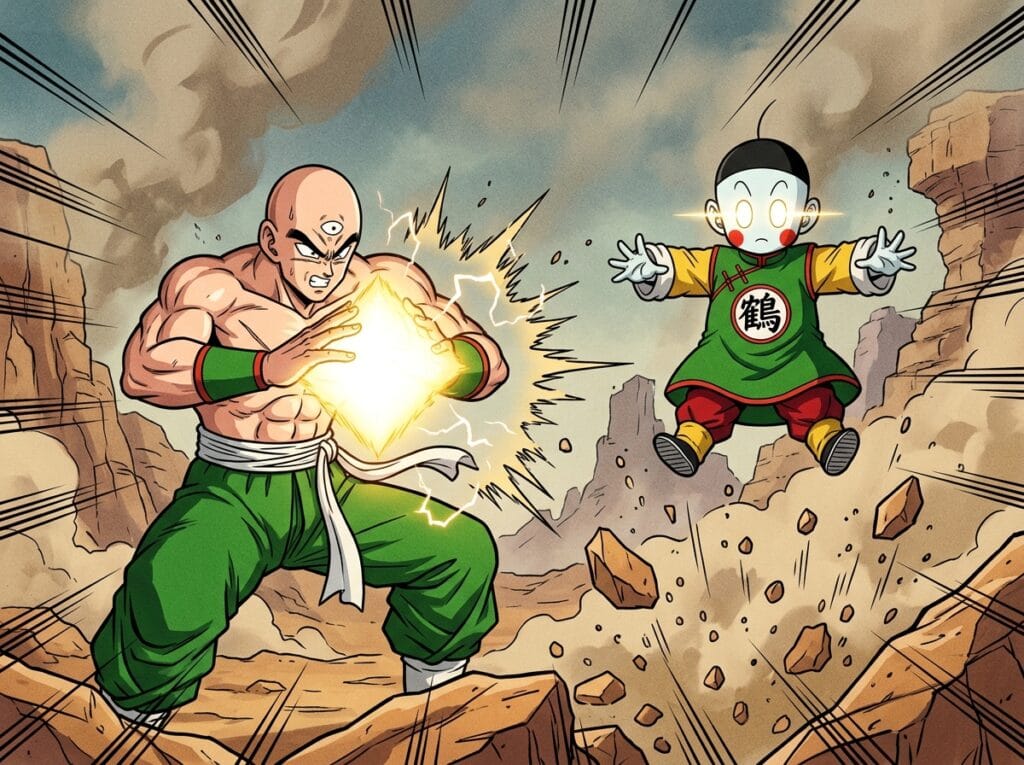
The Tri-Beam, or Kikoho, stands as the most terrifying technique in the Crane School’s arsenal because it doesn’t just use a fighter’s stamina. Unlike other energy attacks that rely on external ki, the Tri-Beam converts the user’s very life force into a devastating blast of energy. By forming a diamond shape with their hands, the martial artist focuses their spirit into a precise point of impact that can crush the ground beneath them. This philosophy of trading one’s health for absolute power reflects the ruthless nature of Master Shen’s teachings. We see the sheer scale of this destruction when Tien Shinhan uses the move to level the entire tournament stage in Dragon Ball episode 101, The Fallen.
Using this technique comes with a massive physical cost that can be fatal if the fighter pushes too hard. Every time Tien fires the blast, he is essentially shaving time off his own life or risking total heart failure from exhaustion. It is a high-risk gamble that emphasizes the Crane School’s focus on winning at any cost, even if it means self-destruction. While the move is incredibly accurate and hard to dodge, the aftermath leaves the user completely drained and vulnerable to any counterattack. This brutal trade-off is a stark reminder of the intense training required to master the lethal arts of the Crane style in Dragon Ball episode 101, The Fallen.
Redeeming the Crane School’s Deadly Art
Ultimately, Tien and Chiaotzu represent the incredible potential of the Crane School when it is stripped of Master Shen’s cruelty. While their former master used these techniques for assassination and spite, these two warriors proved that the style’s precision and power could be used for good. They managed to keep the discipline of the Crane’s beak and the sharp footwork while leaving behind the bitterness of their early training. It is inspiring to see how they evolved from cold-hearted students into some of the most loyal defenders of Earth. They truly showed that your style of martial arts does not have to define your character.
I love how these characters still honor the unique philosophy of their roots even after joining their new allies. They didn’t just abandon their history, but instead, they refined it into something much more honorable. By using the speed and redirection of the Crane School to protect their friends, they gave a new legacy to a style that was once feared for the wrong reasons. It fills a really interesting gap in the lore to see how a rival philosophy can find a place alongside other teachings. Seeing them move past the malice of their masters while keeping their techniques sharp is a perfect way to wrap up their journey.
Frequently Asked Questions
1. What is the core philosophy behind the Crane School?
I teach that martial arts are a tool for assassination and dominance rather than just self-improvement. My style focuses on ending fights quickly by targeting an opponent’s most vulnerable spots with ruthless efficiency. This cold approach is what made my students so dangerous during the 22nd World Martial Arts Tournament, Dragon Ball episode 82.
2. How can a smaller fighter defeat a much larger opponent?
I use precision and speed to overcome raw muscle by mimicking the elegant movements of a bird. By being half-hard and half-soft, you can use circular motions to make an attacker’s own strength work against them. This allows you to deflect heavy blows and strike vital spots with incredible accuracy, Dragon Ball episode 92.
3. What are the most iconic moves of the Crane style?
The Crane Beak and wing blocks are the most famous techniques I teach my students. The Beak formation turns your hand into a sharp spear to strike at the eyes and throat. These movements allow you to turn a simple defense into a beautiful and sharp counter-attack, Dragon Ball episode 94.
4. How does the Crane School differ from other schools?
While other masters focus on the joy of the fight, I focus on the Mercenary Tao mindset of winning at any cost. My techniques are designed for killing efficiency rather than just building character or strength. This rivalry is clear when my students Tien and Chiaotzu first face off against their rivals, Dragon Ball episode 83.
5. What kind of footwork is used in this martial art?
I emphasize clever footwork and timing to keep you safe when you are in a lopsided fight. By moving gracefully like a crane, you can stay out of reach while waiting for the perfect moment to deliver a fatal strike. This movement style is essential for redirecting an enemy’s power before they can land a hit, Dragon Ball episode 101.
6. Why does the Crane style use circular movements?
I use circular wing movements to redirect the energy of an incoming attack away from your body. This technique ensures that you do not have to meet brute force with brute force. It is a perfect way to stay safe while setting up a quick and decisive counter, Dragon Ball episode 89. This lethal efficiency was also demonstrated by the Tao Pai Pai, who utilized the school’s most dangerous secrets to become the world’s top assassin. The legacy of Tienshinhan proves that even the most deadly techniques can be used for a noble cause.