
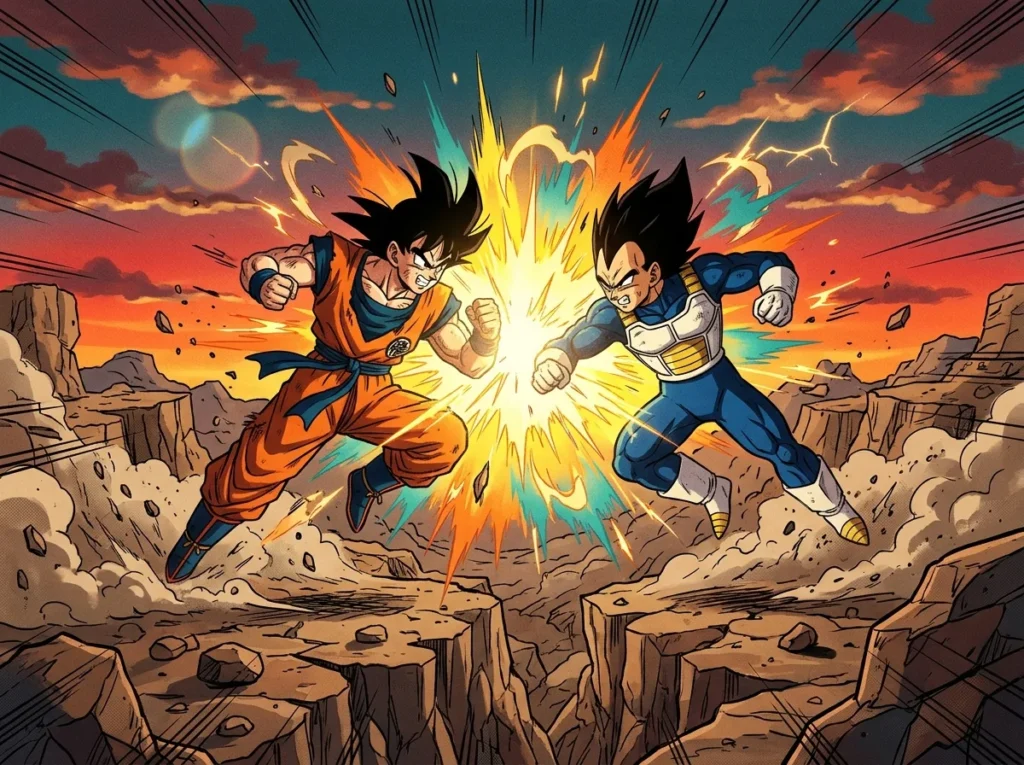
Dragon Ball fan animation is made by independent creators, not by Toei Animation, the studio behind the official anime. It includes short films, fight scenes, and web-series-style projects that imagine unseen events or adapt manga material. Budgets vary widely. The fan film Legend: A Dragon Ball Tale was reported to take four years to make and run about 10 minutes, while its creator listed the budget as $0.
Fan projects also face real legal limits. In the United States, nonprofit intent alone does not make a project fair use, because courts weigh four factors case by case. Toei Animation says it does not allow unlicensed use of its characters or shows, and unauthorized videos may be blocked or deleted. Some fan teams now ask supporters to fund paid voice actors, artists, and editors.
Key Takeaways
- Dragon Ball fan animation is made by independent creators rather than Toei Animation and comes in three main formats: short films, fight scenes, and web-series-style projects.
- Legend: A Dragon Ball Tale, made by Studio Stray Dog under Naseer Pasha, was reported to take four years to make and run about 10 minutes, and its creator listed the budget as $0.
- In the United States, nonprofit intent alone does not make a Dragon Ball fan project fair use, because courts weigh four factors case by case.
- Toei Animation does not allow unlicensed use of its characters or shows, so unauthorized Dragon Ball fan videos may be blocked or deleted from video platforms.
- Fan creators who want to reduce legal risk can use original characters, keep borrowed Dragon Ball material to a minimum, or seek permission from the rights holder before public release.
What Counts as Dragon Ball Fan Animation?
Dragon Ball fan animation is any animated project made by fans rather than by Toei Animation, and it comes in a few common formats. Short films are the most typical. Many run only a few minutes and focus on a single idea, such as one battle or one character moment.
Fight scenes are another popular format. Fans often animate clashes that existed only as drawings in the manga, so viewers get to see motion, sound, and camera movement for the first time. A short fan animation of the Z Fighters’ battle against Gas from the Dragon Ball Super manga, shared by Will Dream Animation in 2025, is a good example of this approach.
Web-series-style projects make up the third group. They usually run as episodes over time instead of as one film, and many imagine events the anime and manga never showed. Dragon Ball Unseen, for instance, describes itself as a visual-novel-style web series that depicts moments outside the official story.
Saiyan rivalries show up again and again in this scene. Vegeta’s long feud with Goku and Broly’s brutal fights have inspired countless fan films, and fans regularly search for matchups like Goku vs Broly. Animation lets creators answer questions the official series left open, such as who would win a fight that never happened on screen.
How Does Fan Animation Differ From Official Anime?
Official Dragon Ball anime is produced by Toei Animation with a licensed team and a set budget, while fan animation is made independently by creators working outside that system. The difference in scale is large. A licensed production has a studio, a production schedule, and staff who work on it full time. A fan project can range from a small effort with no money at all to a team paying for voice work, art, and editing.
Funding works differently too. Toei plans its budget before production begins, so the studio knows how many animators and voice actors it can hire. Fan teams have to find money in other ways, such as donations or crowdfunding, or they rely on volunteers. The fan film Legend: A Dragon Ball Tale shows how far this can go, since its creator listed a budget of $0.
Control is the biggest divide. Official anime follows the story Toei and the franchise’s creators build, and it becomes part of the official canon that fans treat as the main timeline. Fan works are not part of that canon or continuity. Toei has said its internal policies do not allow fan-created artwork to be folded into its existing intellectual property, so a fan-made battle stays a fan project.
The purpose behind each type of work also differs. Official anime aims to continue or expand the franchise for viewers around the world. Fan animation often explores questions the official series never answered or shows a moment that fans wanted to see on screen.
The Dragon Ball official site announced a 40th-anniversary special video on January 25, 2026, with Toei Animation as producer and Naoki Miyahara as director. Placed next to a fan fight animation, it shows what licensed work looks like: an official producer, a named director, and a project that belongs to the franchise itself.
How Long Does It Take to Make a Dragon Ball Fan Film?
There is no standard schedule for a Dragon Ball fan film. The time it takes depends on the size of the team, the art style, and how much work volunteers can do. The best-documented example is Legend: A Dragon Ball Tale. Nerdist reported in July 2022 that the Studio Stray Dog project took four years to make and ran about 10 minutes.
That ratio shows how slow hand-made animation can be. Each minute of finished footage can require many drawings, scenes, and rounds of editing. The creator’s YouTube description for the film’s second trailer lists the budget as $0, so the work was carried out without a listed budget.
Some fan teams plan for paid staff from the start. Dragon Ball Unseen, a visual-novel-style web series, says its Patreon supporters help pay people for voice work, art, and editing. Paying artists and voice actors usually lets a team keep a steadier schedule than a group that depends only on free time.
Crowdfunding is also common in the wider fan-production scene. The live-action pilot Dragon Ball Z: Light of Hope ran an Indiegogo campaign in 2014 with a goal of $9,001. Pledge levels ranged from $5 to $5,000, so a fan could support the project with a small contribution or a much larger one. This was a live-action web series, not an animated project, so its budget should not be read as a benchmark for animation costs.
The campaign’s progress shows the stages a fan project moves through. In a January 20, 2015 update, the team said post-production was almost complete. This is the stage where footage is edited, sound is added, and effects are finished. The team then scheduled a supporter prescreening for February 3, 2015, giving backers a first look before a wider release.
Who Made Legend: A Dragon Ball Tale?
Legend: A Dragon Ball Tale was made by Studio Stray Dog, with Naseer Pasha associated with the project.
Its profile comes from the coverage it has received. Nerdist reported on the film in July 2022, and fans have discussed it in forums, comment threads, and video discussions.
Leading a project like this means handling many jobs at once. Someone has to plan each scene, keep the art style consistent, and decide when a shot is ready to move on.
The film also shows what a fan animation can achieve. It was made without an official license from Toei Animation and still drew press coverage. Reaching an audience does not change the legal picture, though. Toei’s rules on unlicensed use still apply, and a popular fan video can still be blocked or removed if it breaks them.
Is Making Dragon Ball Fan Animation Legal?
Making Dragon Ball fan animation without permission carries real legal risk in the United States, even when the creator makes no money from it. Under U.S. copyright law, copyright owners have the exclusive right to prepare derivative works based on their creations. That means a new film built on Dragon Ball characters, settings, or scenes falls under that right unless a legal limit applies.
The main limit is fair use. Courts judge fair use case by case, using four factors: why the new work is being made, what kind of original work it borrows from, how much of that work it uses, and whether it harms the market for the original. The U.S. Copyright Office says there is no fixed percentage or amount of a work that guarantees fair use. A fan who uses only a few seconds of footage is not automatically in the clear.
Making a film for free and sharing it without charge does not settle the question. The purpose factor asks whether the new work adds something fresh or mainly repeats the original. A fan film that retells a famous fight shot for shot leans heavily on the source material, while one that tells a new story with its own scenes has a stronger case. Free distribution is only one piece of the larger analysis.
Toei Animation’s policy is direct on this point. The studio does not allow unlicensed parties to use its characters or shows, and it warns that unauthorized videos can be blocked or deleted from video platforms. Toei has also said its internal policies prevent it from folding fan-created artwork into its existing intellectual property. For a fan animator, that means drawings or designs made for a fan film will not become part of the official franchise, so the creator cannot expect the studio to adopt them later.
Creators who want to avoid these questions have a few clear options. They can make projects with original characters rather than Dragon Ball’s cast. They can keep borrowed material to a minimum. They can also seek permission from the rights holder before public release. Each option reduces the risk, but none of them removes the need to think about copyright before a project goes online.
Where Can You Watch Dragon Ball Fan Films?
Many Dragon Ball fan films are shared on YouTube, and smaller collections appear on Facebook and Reddit. YouTube is a common home for the scene because creators can upload short films, trailers, and multi-part series there at no cost. To search it well, try the film’s title with “Dragon Ball fan animation,” or add a character name such as Vegeta or Broly to narrow the results.
Facebook pages and groups also share fan work, especially when a creator wants to reach a particular community. Reddit serves a different purpose. Its Dragon Ball threads often bring fans together to discuss new projects, give feedback, and sometimes organize teams to edit fan animation. Searching a Dragon Ball subreddit for “fan animation” or “fan film” usually turns up recent posts alongside older threads that link to the original upload.
Each platform has its own way of organizing content:
- YouTube: full films, trailers, and episode series
- Facebook: creator pages and fan groups
- Reddit: discussion threads, feedback requests, and team calls
Availability can change without warning. Because Toei Animation does not allow unlicensed use of its characters, unauthorized videos may be blocked or removed, so a link that worked last year may now show an error. Creators sometimes move their work to a new channel or retitle it, which makes searching by creator name more reliable than saving a single web address. Noting the creator’s name and the year of release makes it easier to find a project again.
Dragon Ball Unseen also keeps its Patreon page as a central place for information about the series. Checking a creator’s page is a practical way to see whether a project is still active, since a page that stops getting updates can signal that work has paused.
Why Do Fans Keep Making Dragon Ball Animation?
Fans keep making Dragon Ball animation because the series is tied to their earliest memories of watching anime, and many want to create something of their own. For a large group of fans, Toonami and other broadcasts were the first time they saw Goku, Vegeta, and their friends move on screen. Those early viewing habits stay with people for decades. Some later learn animation tools and start making scenes that return to the moments they loved most.
Tributes to Akira Toriyama, the creator of Dragon Ball, appear throughout the fan animation scene. Some projects open with a dedication, while others recreate his character designs and panel layouts with care. Many creators treat their work as a thank-you to the artist whose world they grew up with.
Current trends point in three main directions. The first is fight-focused shorts, which concentrate on a single clash and use motion, sound, and camera movement to bring it to life. The second is manga-based adaptations, where creators turn drawn panels into moving scenes. The third is projects that fill gaps in the official story, such as moments between arcs or side characters who rarely get screen time.
The Gas fight shows the first two trends at work. In August 2025, Will Dream Animation shared a short fan animation of the Z Fighters’ battle against Gas from the Dragon Ball Super manga. The clip turned a fight that had existed only as drawings into a sequence with timing, sound, and movement. That is exactly what makes manga adaptations appealing to fans.
Gap-filling projects follow a different path. A creator might imagine how a minor fighter spent months training off screen, or show a conversation that the official series only hinted at. These stories let fans spend more time with characters the anime never had room to explore. Because independent creators run the scene, these ideas can go in directions the official franchise may never take.
Finding the Right Fan Animation to Watch Next
If you are new to fan animation, start with a short film you can finish in one sitting. Legend: A Dragon Ball Tale, made by Studio Stray Dog under Naseer Pasha, runs about 10 minutes. After that, watch the Gas fight animation from Will Dream Animation to see how a single clash can be handled in a different style.
If you want a story that unfolds over several episodes, look at Dragon Ball Unseen. Geekdom101, Jordan The Dragon Lee, and Starblast Studios co-produce the series, which shows events that the anime and manga never included. Check its Patreon page before you commit. A page that has gone quiet may mean the project has paused.
Parents and collectors should keep in mind that unlicensed videos can disappear without warning. Search by creator name and release year instead of saving a single link, so you can find the project again if the original upload is removed.
Aspiring creators can begin with a small, original idea. Write a scene with new characters, or limit any Dragon Ball material to a brief moment. Before you post publicly, review the fair use factors and decide whether you need permission from the rights holder first.
Frequently Asked Questions
1. Can fan animators earn money from their Dragon Ball videos on YouTube?
Some fan teams in the examples fund their work through supporter payments, such as Patreon contributions that pay staff for voice work, art, and editing. Earning money from a video that uses Dragon Ball characters adds to the legal risk. U.S. fair use looks at why a new work is made, and Toei Animation does not allow unlicensed use of its characters. A creator who wants income from the project should get permission from the rights holder before publishing.
2. How can I tell whether a Dragon Ball fan animation is a legitimate fan project or a copy?
Start by checking whether the video names its creator or team in the description or credits. A real fan project usually has a creator page, a release year, and a clear explanation of who made it. Projects with an official-looking page, such as Dragon Ball Unseen’s Patreon page, are easier to trust than reposted clips with no credits.
3. Do fan animators need professional animation training to make a short?
No formal training is required to make a short, and many fan creators learn animation on their own. A project with one idea and a run time of a few minutes is much easier to finish than a long film. Teams that want paid voice actors, artists, or editors need funding for those roles, but a solo creator can work without any training credentials.
4. Is Dragon Ball Heroes a fan-made project?
No, Dragon Ball Heroes is an official Dragon Ball franchise project produced by Toei Animation. Fan animation is made by independent creators working outside the studio, so Heroes falls outside the fan scene covered here. Fan works like the Gas fight animation are different because they are made without a license from Toei.
5. Is Dragon Ball GT a fan-made series?
No, Dragon Ball GT is an official anime produced by Toei Animation, not a fan creation. Fan projects are made by independent creators, so GT counts as licensed work rather than fan animation. Fans who want more stories set in that world can look for fan projects, but those projects still face the same legal limits that apply to all fan work.

