
Dragon Ball figure packaging comes in a few main styles, from buildable model kits in sturdy boxes to collection releases designed to look like manga volumes. Bandai Spirits’ 2017 Dragon Ball Mecha Collection volume 7, priced at ¥715, came in a package styled after a manga book, with side artwork meant to connect across all seven volumes. Knowing these styles helps you understand what you are holding and how well it is protected.
Printed details on the box are often the best clue to a figure’s exact release. A price, release date, or age grade can separate one edition from another. TAMASHII NATIONS lists the S.H.Figuarts Son Goku 〈Kind-Hearted Saiyan〉 at ¥4,400 with an age grade of 15 years and older, which shows why reading the fine print matters. In the United States, toy-safety rules tied to ASTM F963-23 apply to toys made on or after April 20, 2024, so labeling can matter too. Here at Saiyan Warrior, we break down each part of the box so you can read it with confidence.
Key Takeaways
- Dragon Ball figure boxes come in four main styles: buildable model-kit boxes, collection packs, prize-style packaging, and standard retail boxes, and the box usually shows which type you are holding.
- The printed price, release date, and age grade on a Dragon Ball figure box are the fastest way to tell one edition from another, so compare them with the official listing before deciding a box is genuine.
- A sealed Dragon Ball figure box is the best protection for paint and joints, so the figure should stay sealed if you plan to collect it.
- A repackaged Dragon Ball figure may show artwork of a different character, a release date or price that doesn’t match the official listing, re-taped seals, or fewer accessories than the box lists, so ask the seller for close-up photos before buying.
- The age grade printed on a S.H.Figuarts box matters when choosing a figure for a child, since some products are marked for ages 15 and up.
What Types of Dragon Ball Figure Boxes Exist?
Dragon Ball figures come in a few main box styles, and each one is built for a different job. The most common are buildable model-kit boxes, collection packs, prize-style packaging, and standard retail boxes for ready-made figures. Bandai Spirits sells both buildable model kits and compact collection releases, so the box often tells you what kind of product you are holding.
- Model-kit boxes protect parts and include a build guide.
- Collection packs use presentation to tie a series together.
- Prize-style packaging supports crane-game and event releases.
- Standard retail boxes show the product and its details.
Model-kit boxes are designed to hold parts safely until you assemble them. Bandai’s overseas catalog lists the Entry Grade Super Saiyan God Super Saiyan Son Goku at about 15 cm tall, with about 40 parts on four runners. A runner is the plastic frame that holds each piece until you snap it free. The Japanese price is ¥900, and the box doubles as a guide to the build.
Collection packs take a different approach. The 2017 Dragon Ball Mecha Collection volume 7 held four figures: Master Roshi, Goku, Krillin, and Yamcha. It also contained parts for a vehicle that was assembled across the seven-volume series. Each volume was meant to be a piece of a larger set, not a stand-alone product.
Prize-style packaging is built for a different setting. The official Dragon Ball site announced on February 7, 2025, that the Banpresto History Box Bulma figure includes a diorama and can be won as a crane-game prize. The diorama gives the figure a scene to stand in, so the display base is part of the release.
S.H.Figuarts releases vary in price, release date, sales channel, and stated age grade, so the product details printed on the box are the quickest way to tell editions apart.
How Window Boxes and Blister Packs Protect Figures
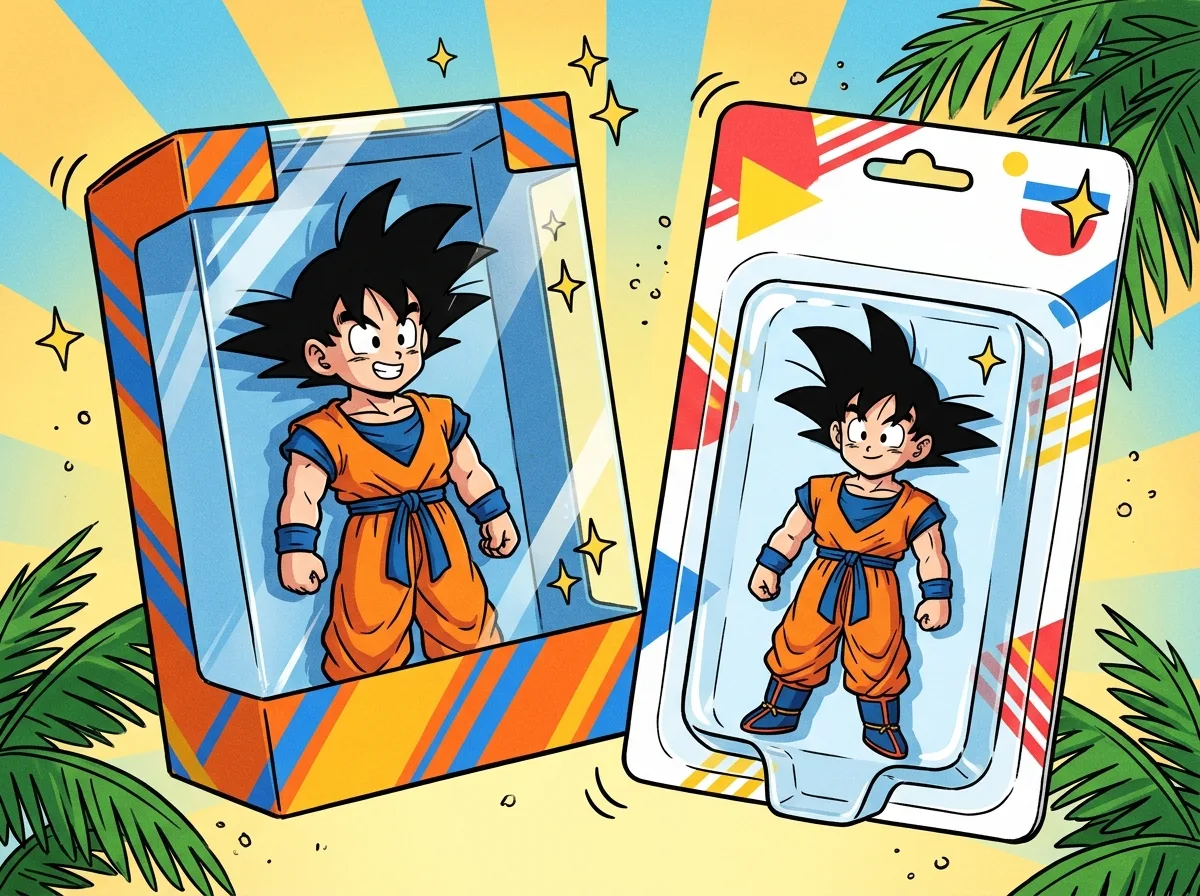
Window boxes let you see the figure without opening the package. The clear panel shows the paint, sculpt, and pose, so buyers can check the figure before they buy. Because the figure stays sealed, what you see through the window is the condition it left the factory in.
Blister packs work differently. The figure sits on a backing card and is covered by a clear plastic shell, which limits movement during shipping. Arms, hair, and accessories are less likely to knock against the box walls on the way to a store or your home.
Inner trays and molded inserts handle the small pieces. A fitted tray keeps hands, weapons, stands, and spare faces from sliding around. Without that structure, a loose part can rub paint off a neighboring piece or disappear at the bottom of the box.
Model-kit boxes need the most organization. A kit with about 40 parts on four runners, such as the Entry Grade Super Saiyan God Super Saiyan Son Goku, has many thin pieces that can bend or snap if they are not held in place. The runners and inner bags keep those parts in order until you build them.
Packaging also has a display role. A 2025 Dragon Ball figure exhibition at TAMASHII NATIONS STORE TOKYO included a photo spot that recreated the package of S.H.Figuarts Son Goku (Mini)-DAIMA-, showing how a box can promote a figure as well as protect it.
Sealed packaging is the best protection for paint and joints. Once the seal is broken, the figure is exposed to dust, handling oils, and sunlight, and joints can loosen as you pose it. Opening a box can change a figure’s condition, so keep it sealed if you plan to collect it.
How Can You Identify a Release From Its Box?
You can identify a figure’s release by reading the front, side, and back of its box, then matching those details to an official product listing. Start with the front, where the product name, character name, and any edition or color wording usually appear. A subtitle such as 〈Kind-Hearted Saiyan〉 on a Son Goku figure points to one specific version, so two boxes with the same character name may still be different releases.
Work through the box in the same order each time you pick up a figure.
- Read the character name and any subtitle or edition wording on the front.
- Look for a series logo and volume number, such as the Mecha Collection volume number.
- Check the side artwork and spine text for a link to a wider series release.
- Find the release date, price, and sales channel printed on the box or listed for the product.
- Check the stated age grade on the box or listing.
- Compare every detail with an official product listing before deciding the edition is genuine.
Series markings help you place a figure in a set. The 2017 Mecha Collection volume 7 box, priced at ¥715, carries its volume number, which separates it from the other six volumes. Matching side artwork and spine text can show that a box belongs to a larger series release, even when the figure inside looks like a stand-alone item.
Dates and prices often separate editions. The Son Goku Ultra Instinct reissue is listed at ¥6,600 with a September 21, 2024 release date, but its initial release date was April 18, 2020. The same character, therefore, has several editions, and the release dates tell them apart.
Age grades deserve a close look as well. The Kind-Hearted Saiyan listing specifies an age grade of 15 years and older, while the rules for toy labeling in the United States depend on whether a product is meant for children 12 or younger. If a box and a listing disagree on any of these details, trust the official listing over the box alone.
Why Original Packaging Matters for Collector Value
Original packaging is one of the best ways to confirm that a figure is genuine and came from the release it claims to be. A box printed with the product name, edition wording, and manufacturer details gives you a starting point that a loose figure cannot. In the United States, a toy or its packaging must show the producer’s or distributor’s name and address, and U.S. Consumer Product Safety Commission guidance on this requirement makes that information easier to check.
Collectors also look for complete sets. A figure that still has its stand, spare hands, inserts, and accessories from the original box is usually more appealing to a buyer than one with missing pieces. Each part helps show how the figure was meant to be displayed.
A clean, undamaged box can matter as much as the figure inside, especially for sealed items. Creases, torn corners, cloudy window panels, or sticker residue can lower interest even when the figure itself is perfect. For a sealed figure, the box is the only record of its condition, so buyers often study it closely.
Several factors shape how a collector judges a boxed figure:
– The condition of the box, including corners, panels, and printing – Whether the seal is intact – Whether the box is the correct edition for that figure – Whether every included part is present
Boxes that were thrown away can make identifying a release harder. Without the box, it becomes difficult to separate one release from a near-identical one, so keeping the box, inserts, and any receipts or product listings together is worth the effort.
Do Dragon Ball Figure Boxes Differ by Region?
Dragon Ball figure boxes can differ by region in language, printed details, and the sales channel that carried the product. Japanese releases and overseas versions do not always match, so a figure bought in one country may not look exactly like the same figure sold in another. Bandai Hobby publishes an overseas model-kit catalog, which means a kit’s overseas listing can differ from its Japanese release in how it is presented and priced.
Prices and release dates can also vary by region and sales channel. A figure sold through a major retailer, a crane-game machine, or an online shop may carry different dates or prices than the same figure sold elsewhere. Before you decide that a box is the edition you want, compare its release date with the listing for your region.
In the United States, toy-safety rules add another layer. ASTM F963-23 is the toy-safety standard for toys manufactured on or after April 20, 2024, under 16 C.F.R. part 1250. Under that standard, a toy or its packaging must show the name and address of the producer or distributor, and a website address can be used in place of a mailing address.
Products intended for children 12 years old or younger carry extra requirements. Where applicable, they must include permanent tracking information on both the product and its packaging. That information includes the manufacturer’s identity, along with the manufacturing date and place.
The age label matters when you choose a figure for a child. Some S.H.Figuarts products are marked for ages 15 and up, so a figure that looks suitable for a younger fan may still carry an older age grade. Read that line on the box first, then check it against the official listing before you buy.
How Do You Spot a Repackaged or Reboxed Figure?
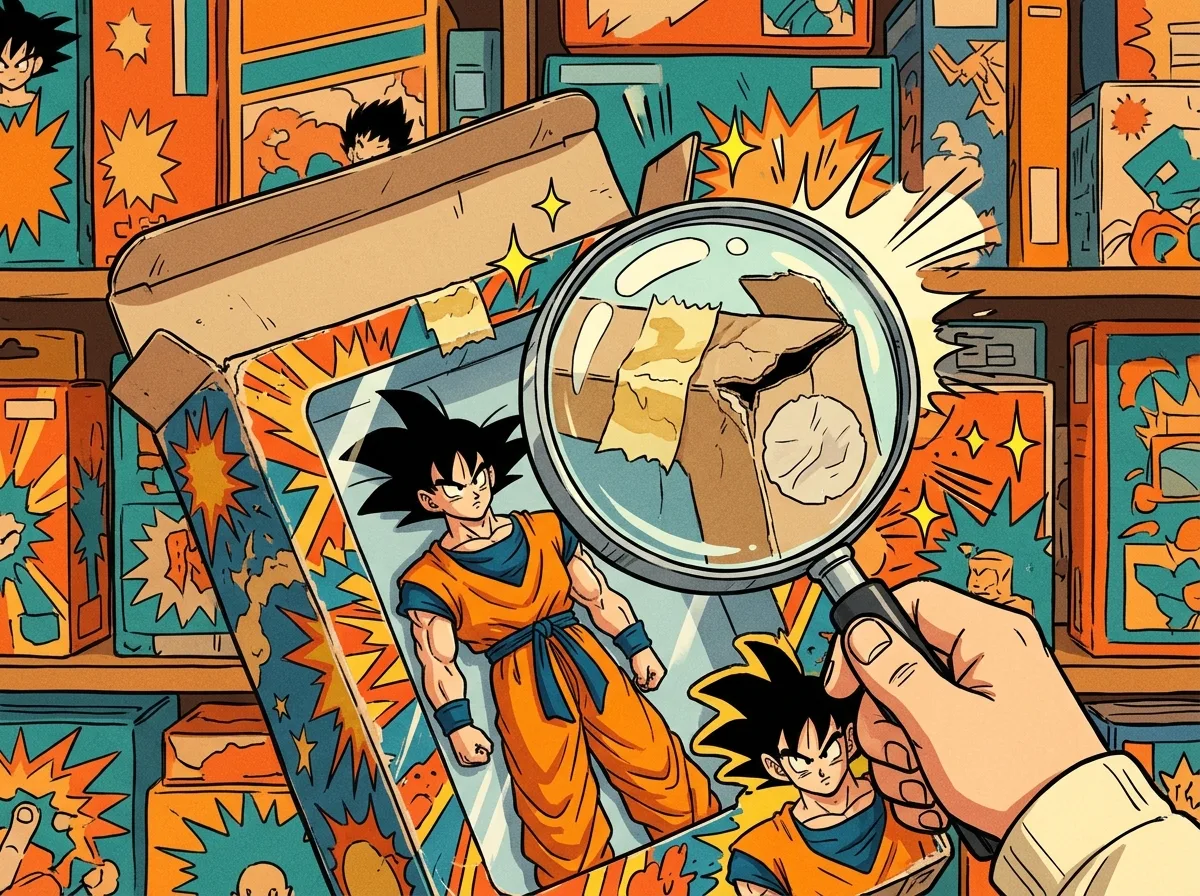
A repackaged figure is one that has been moved from its original box into a different one, often to hide a missing part or a wrong edition. Several warning signs can reveal this, and most are easy to check before you pay.
Look for these warning signs when you inspect a boxed figure:
- Artwork that shows a different character, pose, or logo than the figure inside
- A release date or price that does not match the official listing for that edition
- Missing or hard-to-read producer details, or no required safety wording on the packaging
- Re-taped seals, box card that feels thinner or a different shade, or fresh glue marks along the flaps
- Fewer hands, stands, or parts than the accessory list printed on the box
Start with the artwork, since the box front should show the same character and pose as the figure. A Mecha Collection box whose side art shows a different character than the figure inside is a clear mismatch. Next, compare the release date, price, and age grade with the official listing for that edition.
Check the seal and flaps under a bright lamp. Look for tape edges that lift or overlap, glue shine along the seams, and card that looks thinner on one side than the other. For a model kit, count the runners and parts, because a Super Saiyan God Super Saiyan Son Goku kit should contain about 40 parts on four runners.
If the box and the figure do not match, ask the seller for more photos before buying. Request close-ups of the front, back, flaps, and inside tray, along with a photo of every accessory laid out beside the box.
What to Check When Buying Boxed Figures Online
Online photos are often your only look at a boxed figure, so ask for more than one angle before you pay. When the seller can provide them, request photos of every side of the box, a close-up of the seal, and the inside of the package. Phrases like “good condition” tell you very little, so ask what the seller means by it.
Compare the listing with the official product page for the exact edition. Check the product name, release date, and age grade against that page, since two releases of the same character can look almost identical. Looking up the official release details before you pay makes mismatches much easier to spot.
A clear listing should also answer a few basic questions:
- Whether the figure is new, opened, or reboxed
- Descriptions of box wear, dents, and corner damage
- Whether the seal is intact, with a photo of the tape or sticker
- Close-ups of the box artwork and printed labels
Be cautious when a listing has only a small thumbnail or no close-ups of the printed labels. Sellers who leave out the artwork may be hiding a mismatch between the box and the figure inside. If the seller refuses to share those photos, it is reasonable to pass on the listing.
Reading Your Next Figure’s Box With Confidence
Start with the next figure you plan to buy, or the one already on your shelf. Write down the character name, any subtitle such as 〈Kind-Hearted Saiyan〉, the price, the release date, and the age grade. Then search the official Dragon Ball site for that exact product name, since a similar release may appear right beside it.
Compare each detail line by line. If the price, release date, and edition wording all match, the box is probably the release it claims to be. If one of them differs, you may be holding a reissue, a regional version, or a repackaged figure, so check the seal and inside tray more closely.
If the figure is for a child, read the age line first. A figure marked for ages 15 and up may not suit a younger fan, even when the character looks familiar.
Finally, keep a simple record. Photograph the front, back, and sides of the box, along with the producer’s name and address and any date printed on it. Store those photos with your receipt and the official listing. That file will help you identify the release later, and it will make things easier if you ever decide to sell or trade the figure.
Frequently Asked Questions
1. How can I tell whether a Dragon Ball figure box is from Japan or an overseas release?
Start by checking the language printed on the box, since Japanese and overseas packaging often use different text. Then compare the price, release date, and sales channel with the official listing for the region where you bought the figure. If those details do not match your region’s listing, the box may be a different edition than you expected.
2. What should I do if a figure’s box has no producer name or address printed on it?
In the United States, toys made on or after April 20, 2024 must show the producer’s or distributor’s name and address on the toy or its packaging. That address can be a website address, so look for a web address before deciding that the information is missing. If neither a name nor an address appears, treat it as a warning sign and ask the seller for close-up photos of every side of the box.
3. How should I store boxed figures so the packaging stays in good condition?
Keep boxed figures in a cool, dry spot away from direct sunlight, which can fade printed artwork and weaken the card. Store them in a clean area where dust cannot settle on the window panels or flaps. Avoid stacking heavy items on top of boxes, since crushed corners and creases can lower a box’s value to collectors.
4. If I only have the figure and no box, how can I still find out its release details?
Start by looking for printed markings on the figure’s base, back, or inside parts, since these can show a product name or manufacturer. Next, search the official Dragon Ball site or TAMASHII NATIONS listings using the character name and any subtitle you can find. Compare the paint, accessories, and stand with product photos to narrow down which edition matches yours.

